How to make a family cookbook from handwritten recipes
A cookbook of the family’s own recipes is one of the few gifts nobody else can give. This guide takes you from a box of recipe cards to a printed book in five steps.
What you need
- The recipes: cards, notebooks, loose pages, and the ones that only exist in someone’s head.
- A phone with a camera.
- Some evenings: around two minutes per recipe to check, plus the time to choose and sort.
- For the printed book: a print shop or online printer that binds A4 PDFs.
Step 1: collect the recipes
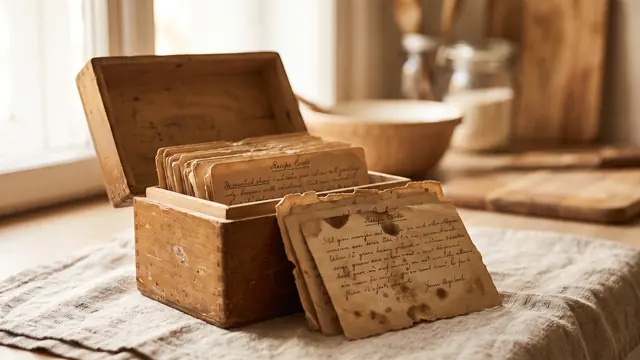
Ask the whole family before you start: aunts, cousins and grandparents often have a few cards nobody else knows about. Agree on one collection point. For recipes nobody wrote down, ask the person who cooks them to dictate while you write; a recipe written on paper today is the handwritten original of tomorrow.
Step 2: digitize them
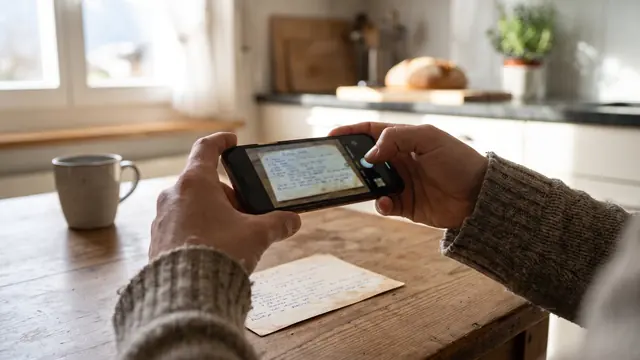
Photograph each page in daylight, flat and without flash. With Kladde the handwriting is read and laid out as a recipe; you check quantities and steps and keep the photo of the page with it. Our guide how to digitize handwritten recipes compares the methods and has photo tips.
If several people add recipes, share one cookbook: with Kladde Pro up to 3 people work in the same collection, so nobody has to send photos around.
Step 3: choose and sort
Not every recipe needs to be in the book. A good family cookbook has 30 to 80 recipes: the ones that are cooked at every celebration, the ones only one person could make, and the ones with a story. Sort them into chapters: starters, mains, desserts, baking, preserves. Or by person: “Grandma Ana”, “Uncle Marko”.
Step 4: cover, foreword and the handwriting
What makes the book personal:
- A cover photo: a dish everyone knows, or the family at the table.
- A short foreword: who cooked these recipes, in which kitchen, for whom. Half a page is enough.
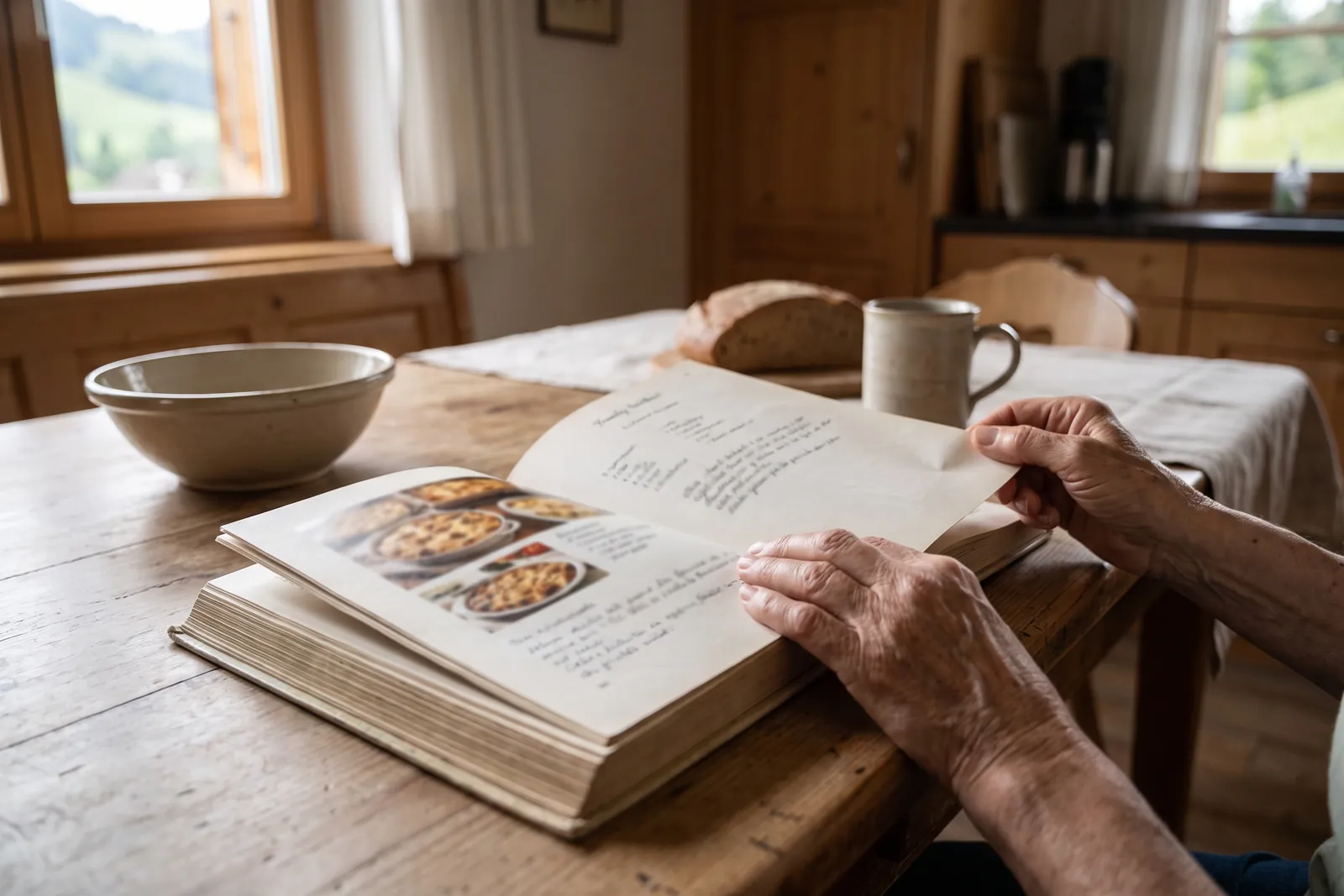
- The handwritten pages: next to each typed recipe, a picture of the original card. That is the part people will turn to first.
Step 5: make the PDF and print it
In Kladde Pro you create a cookbook in five steps: pick the recipes, set the order (by drag and drop or sorted into chapters automatically), choose title, subtitle and cover photo, decide on the handwritten originals and the foreword, and check the summary. Kladde builds an A4 PDF with cover, contents and every recipe. If a recipe changes later, the cookbook shows it and you can rebuild it.
Any print shop can print and bind the PDF. Ask for a sample copy first, and choose a matte, heavy paper: it survives kitchen use better than glossy paper.
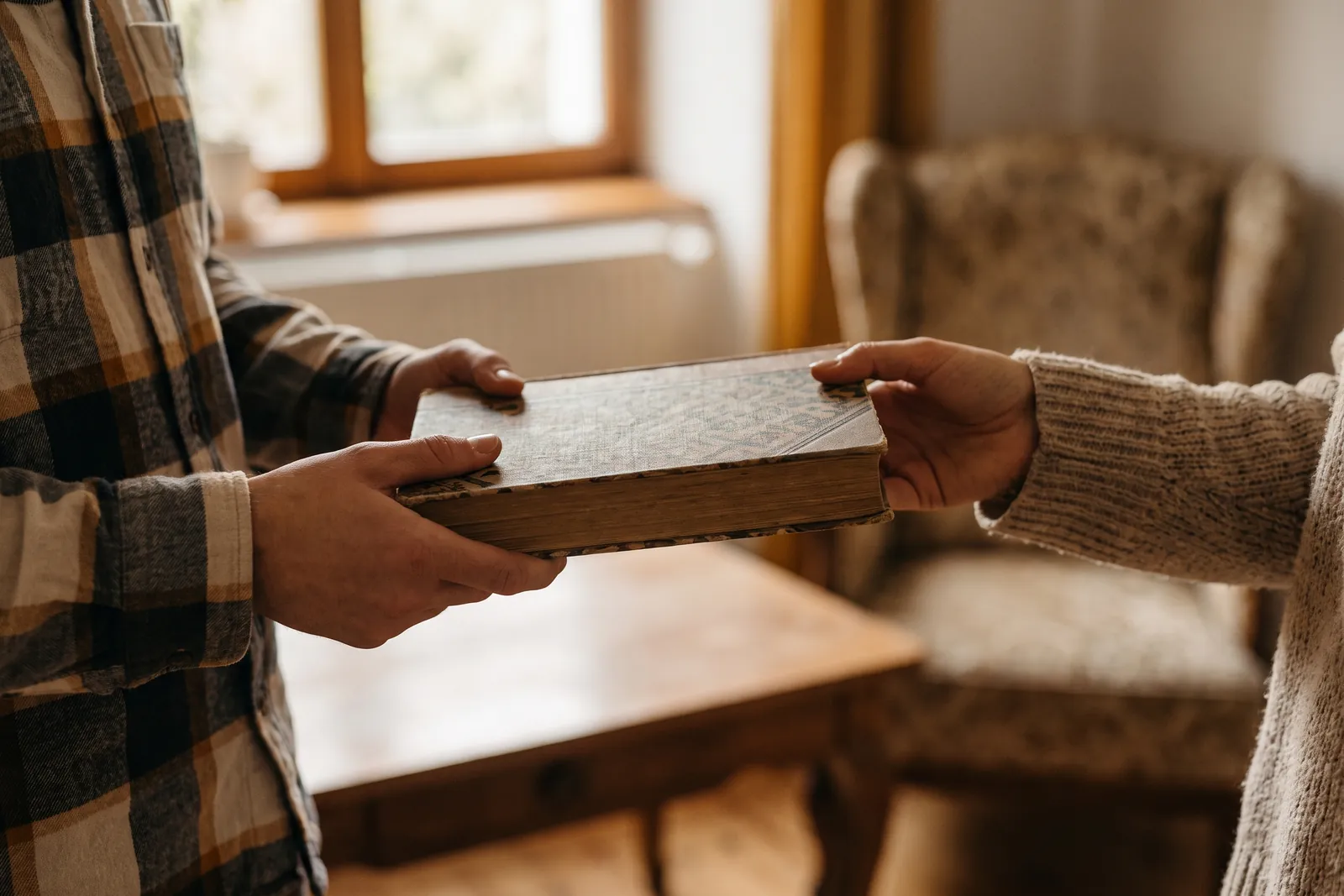
As a gift
A family cookbook takes a few weekends, so start early if it is meant for a birthday or Christmas: about four weeks for collecting and digitizing, one week for sorting and writing, and one to two weeks for printing and delivery. And a book is only the first edition: the digital cookbook keeps growing, and next year’s print can include the recipes everyone sent after seeing the first one.