Standard recipes in a restaurant kitchen: how to write and keep them
The same dish, the same taste, no matter who is cooking. Standard recipes make that possible. Here is what belongs on the sheet and how to get them out of the notebook.
What a standard recipe is
A standard recipe (also called a recipe card or spec sheet) is the binding version of a dish in a professional kitchen. It says what goes in, how much of it, in which order, and what the plate looks like at the end. It is what makes the risotto taste the same on Tuesday as on Saturday, no matter who is on the line.
Why it pays off
- Same quality every service: guests notice when a dish changes with the cook.
- Faster training: a new cook can work from the sheet instead of asking the sous-chef ten times.
- Calculated costs: without fixed amounts there is no real food cost per plate.
- Allergens: guests ask which allergens a dish contains, and the honest answer depends on a written recipe. See our guide allergen information in restaurants.
- Less depends on one person: the knowledge stays in the kitchen when the head chef goes on holiday.
What belongs on the sheet
| Part | Example |
|---|---|
| Name and category | Saffron risotto, main course |
| Yield | 10 portions of 180 g |
| Ingredients with exact amounts | 900 g carnaroli, 2.8 l vegetable stock, 0.3 g saffron |
| Method in numbered steps | with temperatures and times |
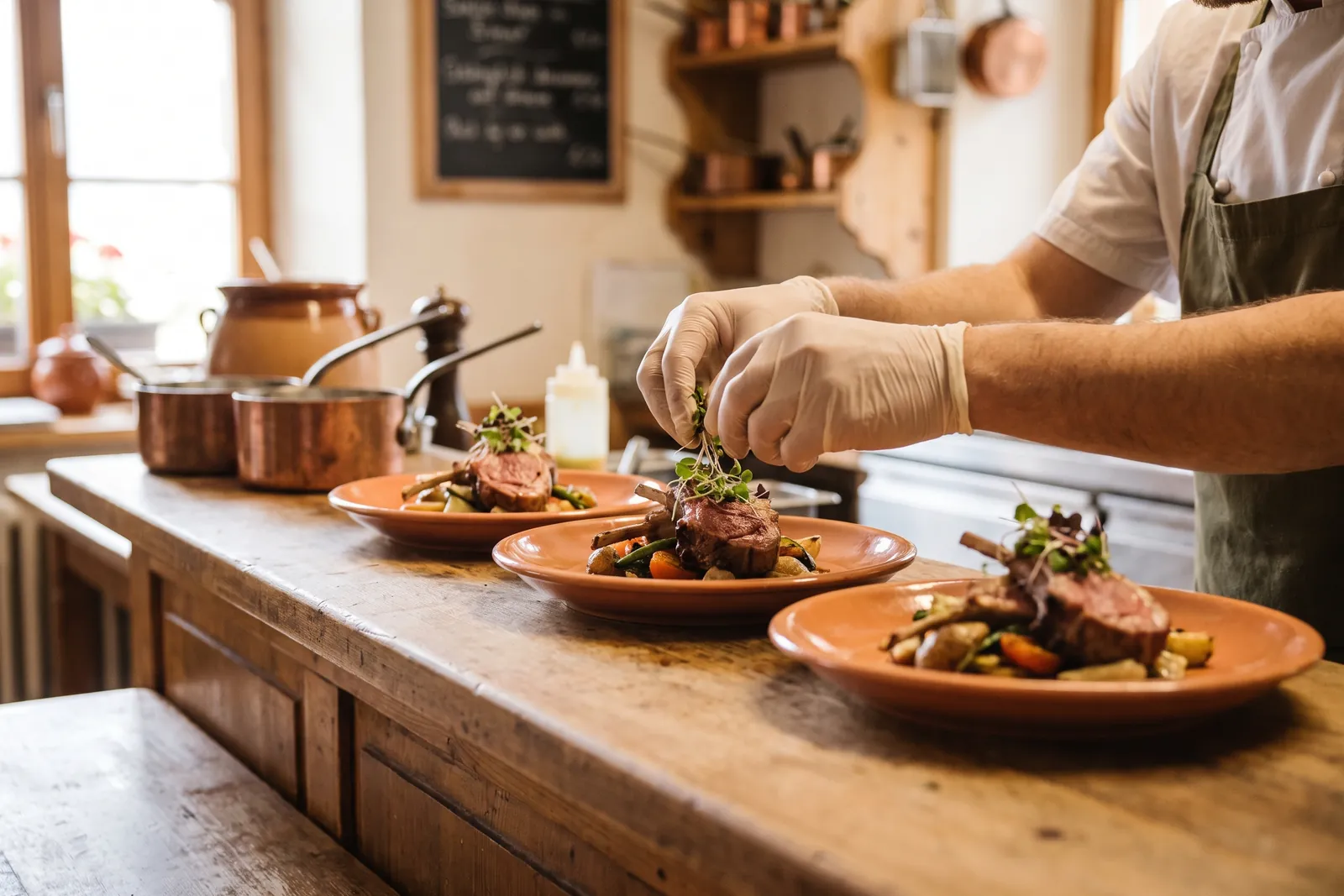
| Plating and garnish | deep plate, 20 g parmesan, a photo of the finished plate |
| Allergens | milk, celery (in the stock) |
| Notes | keeps for 2 hours hot, finish to order |
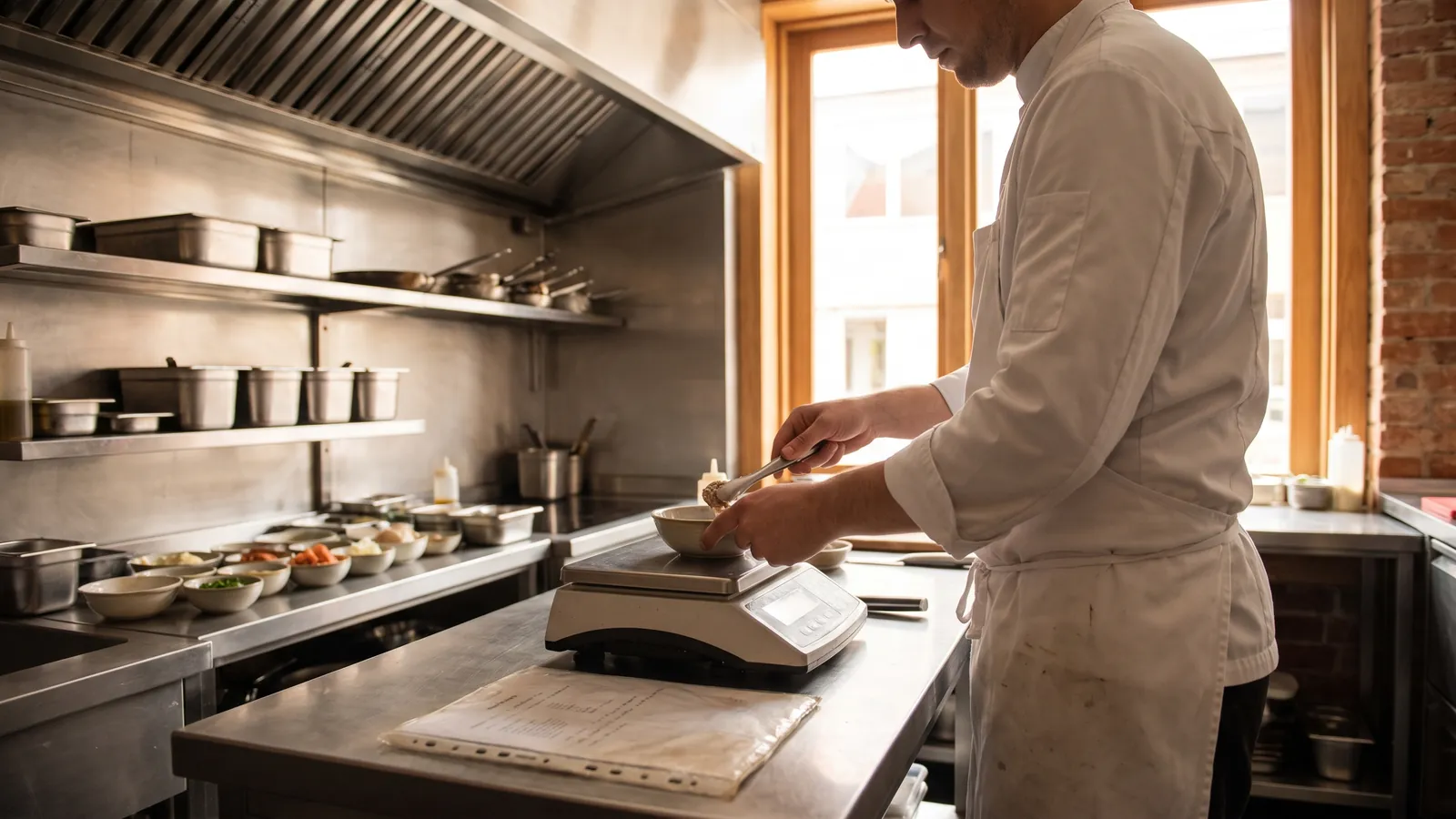
Weigh, don’t estimate. “A handful” or “some cream” work in a notebook only its owner reads, not on a sheet a whole team works from.
From the notebook to the sheet
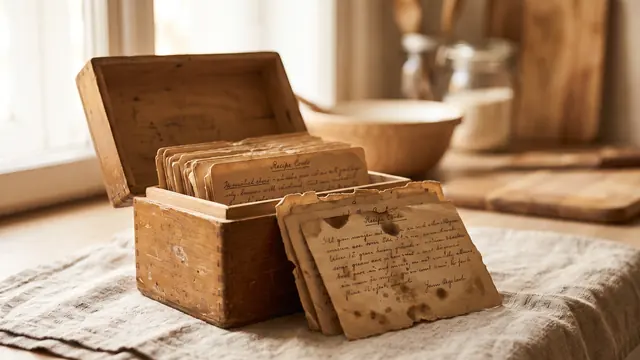
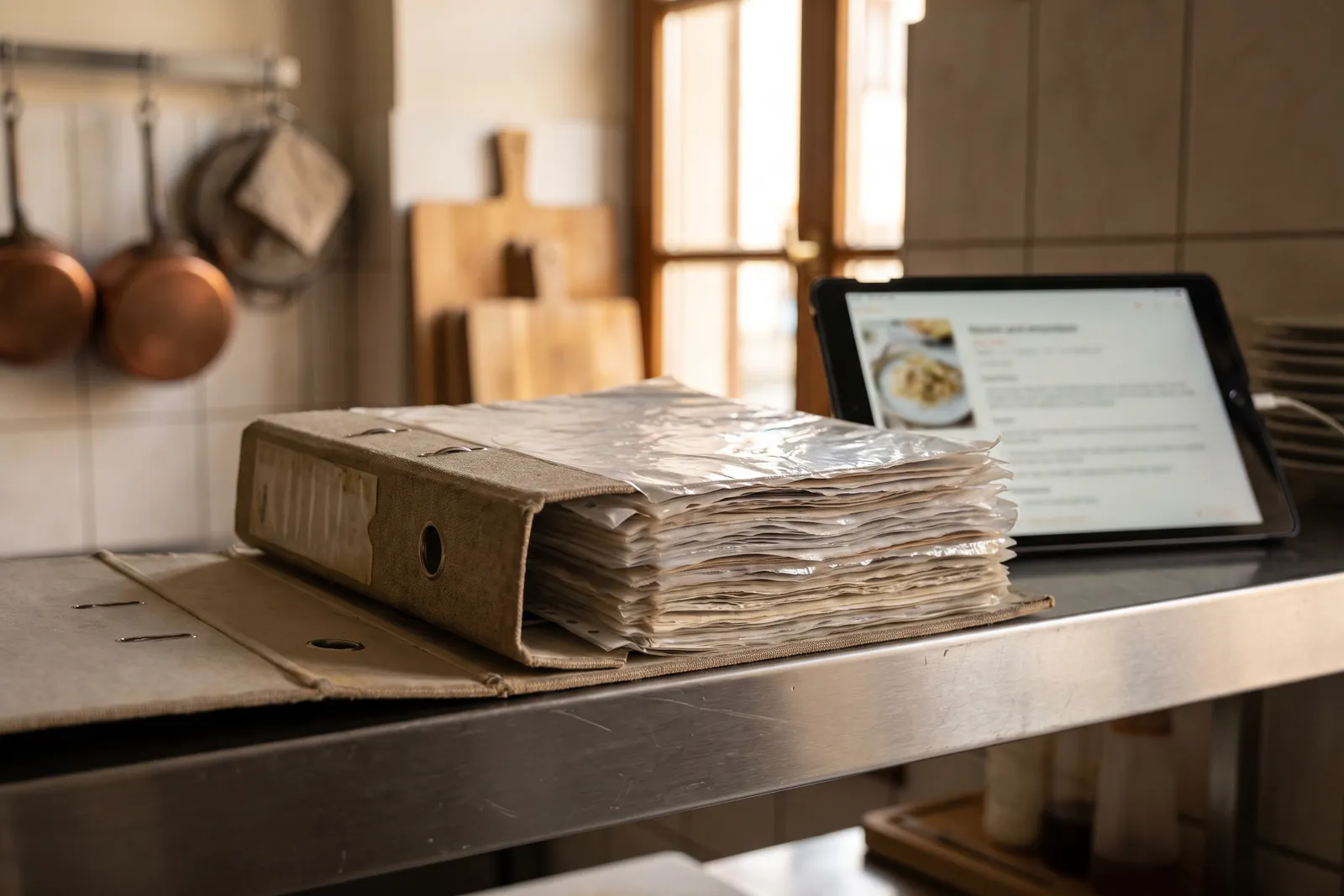
In most kitchens the standard recipes already exist, just not on a sheet: they are in the head chef’s notebook, full of crossed-out amounts and notes in the margin. Typing them up never happens because there is always a service to cook.
With Kladde you photograph the notebook page. Kladde reads the handwriting and lays out the recipe with title, ingredients and steps; anything it couldn’t read with certainty is marked for you to check. The photo of the original page stays attached to the recipe, so nobody has to argue about what the notebook really said.
Keep them alive
A standard recipe is only useful while it is up to date. A few habits keep the collection honest:
- One version only: no copies in drawers. Everyone works from the same collection, in Kladde Pro up to 3 people in one kitchen.
- Change the recipe, not the dish: when the dish changes, update the recipe the same day.
- Check allergens after every change: a new stock or a different bread can bring a new allergen.
- Print for the pass: a PDF per recipe, or the whole collection as a book with chapters for the kitchen shelf.
Start with the dishes that sell
Don’t start with all 200 recipes. Take the ten dishes that are on the menu right now and sell the most, and write them up this week. Then add each new dish when it goes on the menu. After a season the collection is complete without a single lost weekend.