Allergen information in restaurants: what kitchens must document
Guests have the right to know which of the 14 main allergens are in a dish. Here is what Swiss and EU rules ask of a kitchen, and why it all starts with written recipes.
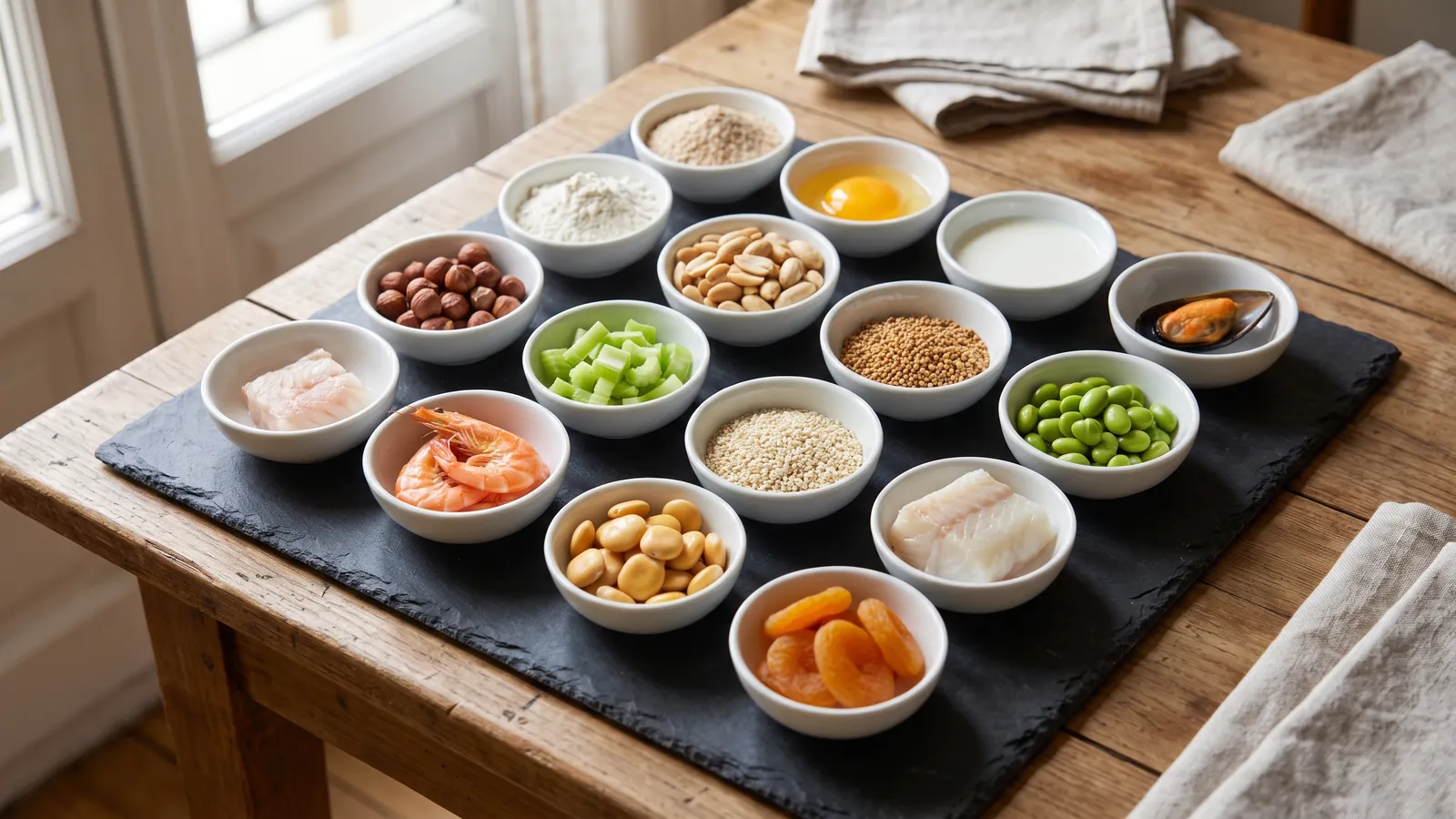
This guide summarises the rules for orientation. It is not legal advice; for your own business, the cantonal food inspectorate (in Switzerland) or your local food authority is the place to ask.
The 14 allergens
Switzerland (Annex 6 of the Ordinance on Food Information, LIV) and the EU (Annex II of Regulation (EU) No 1169/2011) use the same list. A guest must be able to find out whether a dish contains any of them:
| Allergen | Includes, for example |
|---|---|
| Cereals containing gluten | wheat (incl. spelt), rye, barley, oats and products made from them |
| Crustaceans | prawns, crab, lobster |
| Eggs | also in pasta, mayonnaise, glazes |
| Fish | also fish sauce, anchovies in dressings |
| Peanuts | also peanut oil and butter |
| Soybeans | soy sauce, tofu, lecithin from soy |
| Milk | including lactose; butter, cream, cheese |
| Nuts | almonds, hazelnuts, walnuts, cashews, pecans, Brazil nuts, pistachios, macadamias |
| Celery | also celeriac, celery salt, many stocks |
| Mustard | also in dressings and marinades |
| Sesame | seeds, oil, tahini |
| Sulphur dioxide and sulphites | above 10 mg per kg or litre; wine, dried fruit |
| Lupin | lupin flour in some breads and pastries |
| Molluscs | mussels, squid, snails |

Switzerland: written, or verbal with conditions
For food that is not prepacked, as in restaurants, canteens and bakeries, guests must be informed about allergens in the same way as for packaged food. As a rule this is in writing, on the menu or a separate list. According to Art. 39 of the Food and Utility Articles Ordinance (LGV), a business can instead inform verbally when two conditions are met:
- A clearly visible written notice tells guests that allergen information is available on request, for example “Our staff will gladly inform you about allergens in our dishes.”
- The information is available to the staff in writing, or a qualified person can give it immediately.
In practice the reliable way to meet the second point is written recipes for every dish, including its components. Answering from memory is risky: one replaced ingredient, one cook on a day off, and the answer is wrong. Canton Zug’s food inspectorate explains the rules for restaurants in its briefing for gastronomy businesses.
EU countries
In the EU, Regulation 1169/2011 makes allergen information for non-prepacked food mandatory, and each member state decides how it is given: Germany, Austria and Croatia, for example, each have their own national rules on written and verbal information. The principle is the same everywhere: the information must be correct, complete and available before the guest orders.

What the recipe documentation needs
- Every component: the sauce, the stock, the dressing and the garnish are recipes of their own. Celery in the stock is celery in the risotto.
- Bought products: keep the product specification of every bought-in item and check it when the supplier or product changes.
- Changes: when a cook replaces an ingredient, the recipe and the allergen list change the same day.
- Cross-contact: if traces can get into a dish through the fryer, oil or work surfaces, write it down and tell guests honestly. For people with severe allergies, this matters as much as the ingredients.
- Access for everyone: the documentation must be where the service is, not in the head chef’s office.
How Kladde helps
Kladde turns the kitchen’s handwritten recipes into written recipes the whole team can open on a phone or tablet, and print as a PDF for the pass. For each recipe Kladde can estimate the 14 allergens from the ingredients. The estimate is a suggestion: the kitchen checks and confirms it, and only confirmed allergens appear on shared recipes and PDFs. The responsibility stays with the kitchen, but the paperwork gets a lot smaller. More about Kladde for restaurants.